In this second interview, painter Rachael Alexander immerses us in her practice and tells us about her works currently on display at the Arc, Winchester, in the exhibition The Colour Factory Artists: The Every Day. From walks by the coast to the tonal foundations of her canvases, she makes explicit how combining layers of paint and experience adds depth to her inviting scenes.
How did you become a painter and how do you create such dynamic paintings?
I trained as a printmaker at Winchester Art School, but I've moved into painting, and I work from nature a lot of the time. That's my big thing; I grew up in the middle of nowhere in an Artistic family. I like to get out and paint and draw, and sketch. But when I paint, I like to have some emotional connection to what I paint, even if it's somewhere I've never been before and where I am hits me, I just want to get that down on canvas.
I like to work from sketches, although I also take photographs and, at some point, will use them for inspiration and/or reference. I always like to translate it through several sketches to give it my own handwriting before I start painting. I like to work large, and I paint a lot of murals. I love that immersive aspect of it, which is why I went quite large in the exhibition, and I love distant horizons and pathways and that feeling of what's over the Horizon. I'm a big Walker and used to do a lot of long-distance paths. That pathway that you're on, you're always looking at the Horizon and thinking, how long is it going to take to get there, and when I get there, what's going to be on the other side of it? It is the whole journey.
When I work, I do not just take the view that is in front of me, as it is the whole experience for me. They are composite paintings. You won’t find the exact view that I have painted. I might combine rock formations with a Sky from later in the day. I like to bring more of a sense of place, you know, the whole place.
I sketch a lot in watercolour because it's very quick and very immediate. But I like oil painting as a medium. You don't have to hurry before the paint dries. You can step back and really think about what you are doing, play with it, and move the paint around. It's just such a gorgeous, silky medium to use. They are my two favourite media: watercolour for sketching because I can get a lot of information down quickly; it's very fluid. It's absolutely brilliant for putting down the bones of what I want to do, and then oil painting just because it's the most beautiful medium to use.
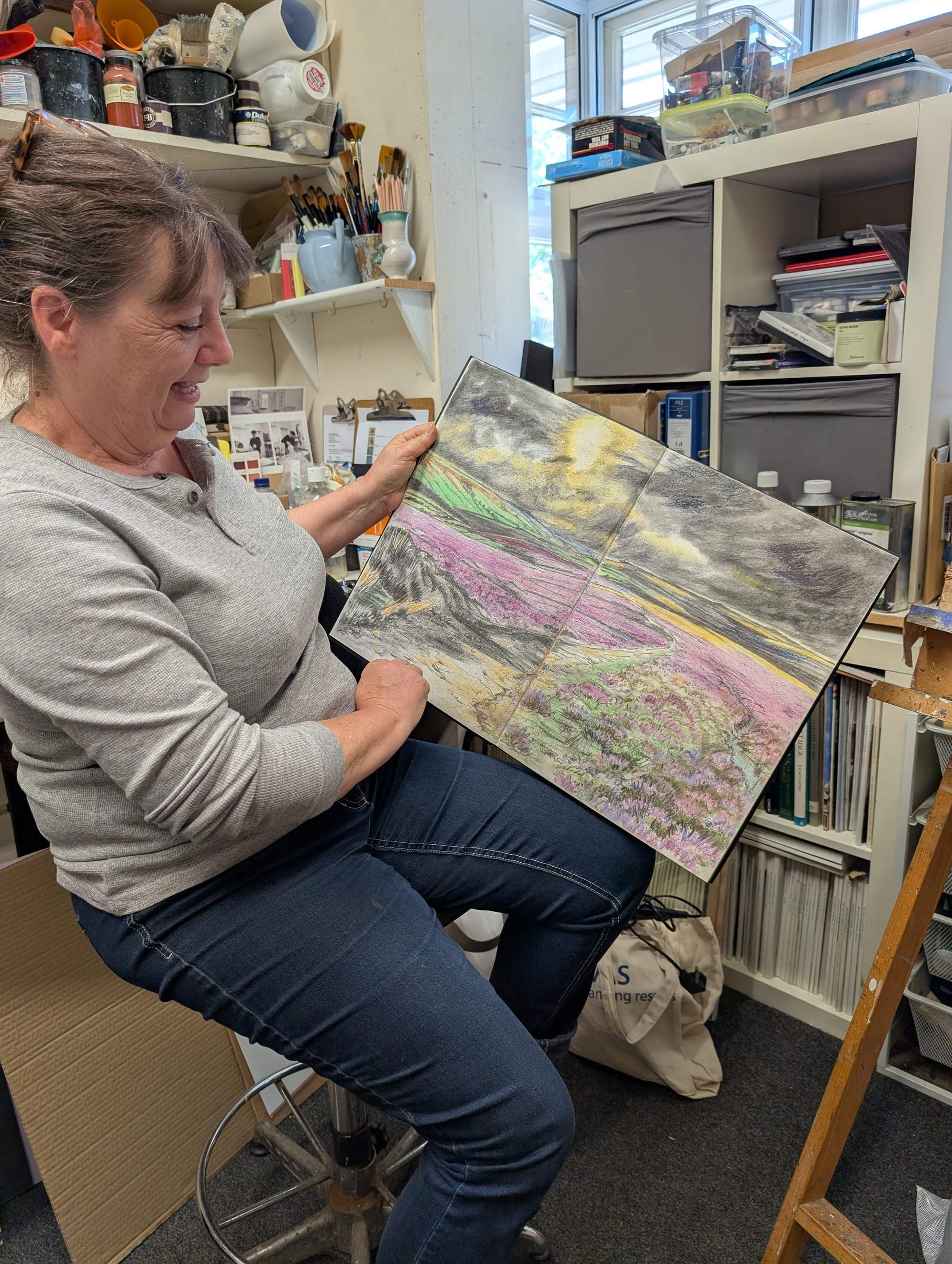
So, I always plan paintings out. I do them to scale as well for my sketches, but then I map out what I call my bare bones or map lines. I always do tonal pictures. So before and again, it's something I always get my students to do. I use charcoal to do my tonal pitch. I do a black and white version because it sorts out your tones. It simplifies everything a little bit so that I can put my darker areas down. It's almost like sketching on my canvas first and then building it up layer by layer. Once I've got the right depth and it is balanced, then I can start introducing my colour, so colour is not the most important thing for me to start with; it's the tone. You get that in first and then build up layer by layer.
Conceptualising, planning and putting your first layers down are really enjoyable and exciting, but the middle bit can be very painful. Once you've gone beyond that, it all starts to come together. That's when joy comes into it, and you can start putting extra bits of colour on, and that's when it becomes fun.
Much of the work on display was made specifically for the exhibition, please could you tell us more about the pieces in the show.
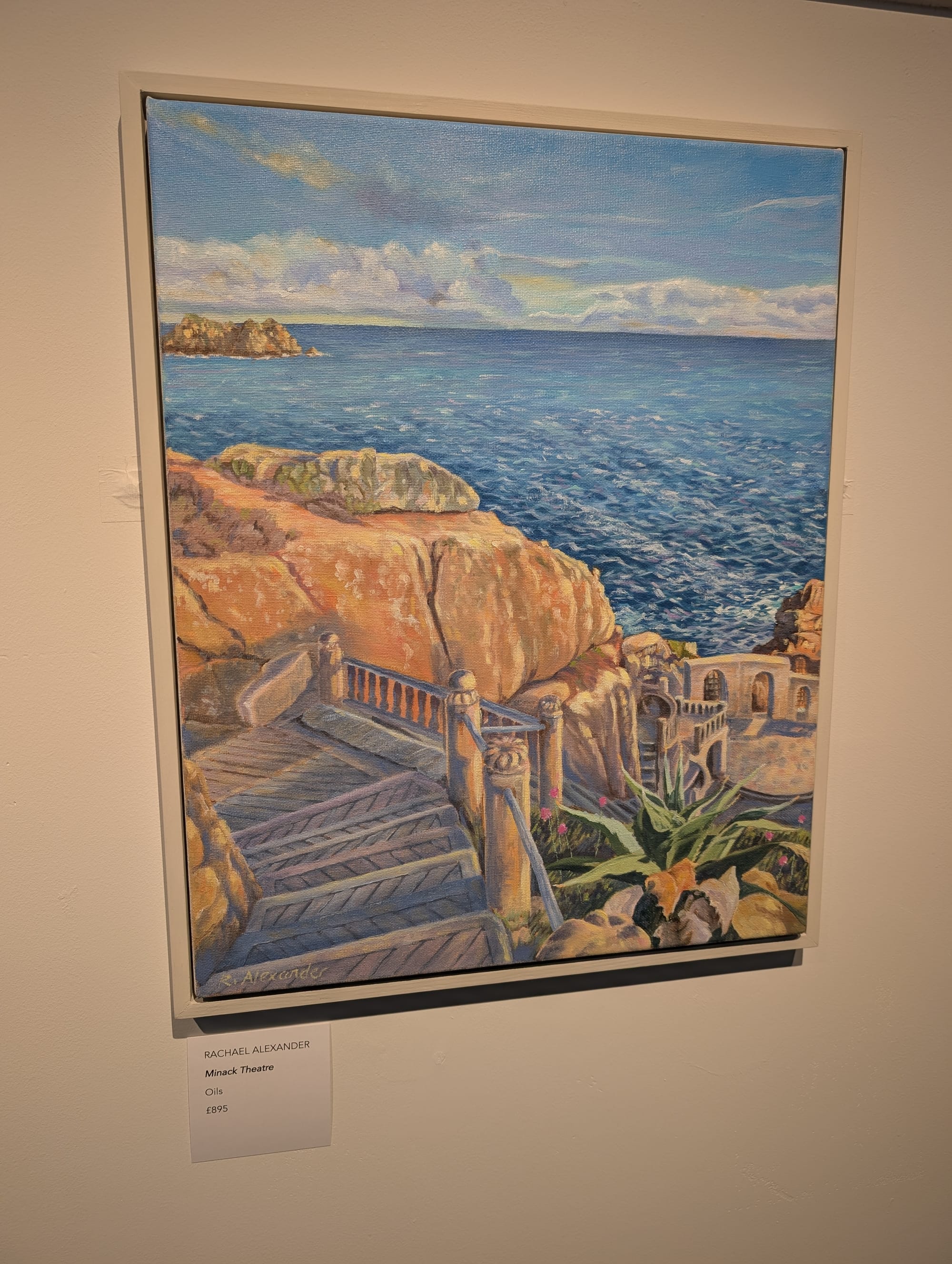
In the exhibition, the places that I have chosen to paint are all favourite places of mine. I have always gone down to Cornwall. I was down there in Autumn staying with a friend in Penzance. We took a walk to Mousehole along the coastal path by the rocks. Often when you see rocks you don't get an impression of scale, but there was this tiny little fisherman out on one of them, and it just made the rocks look enormous. That was a really good starting point for me. I took sketchbooks with me and did some quick little sketches and took some photographs as well to use as reference.
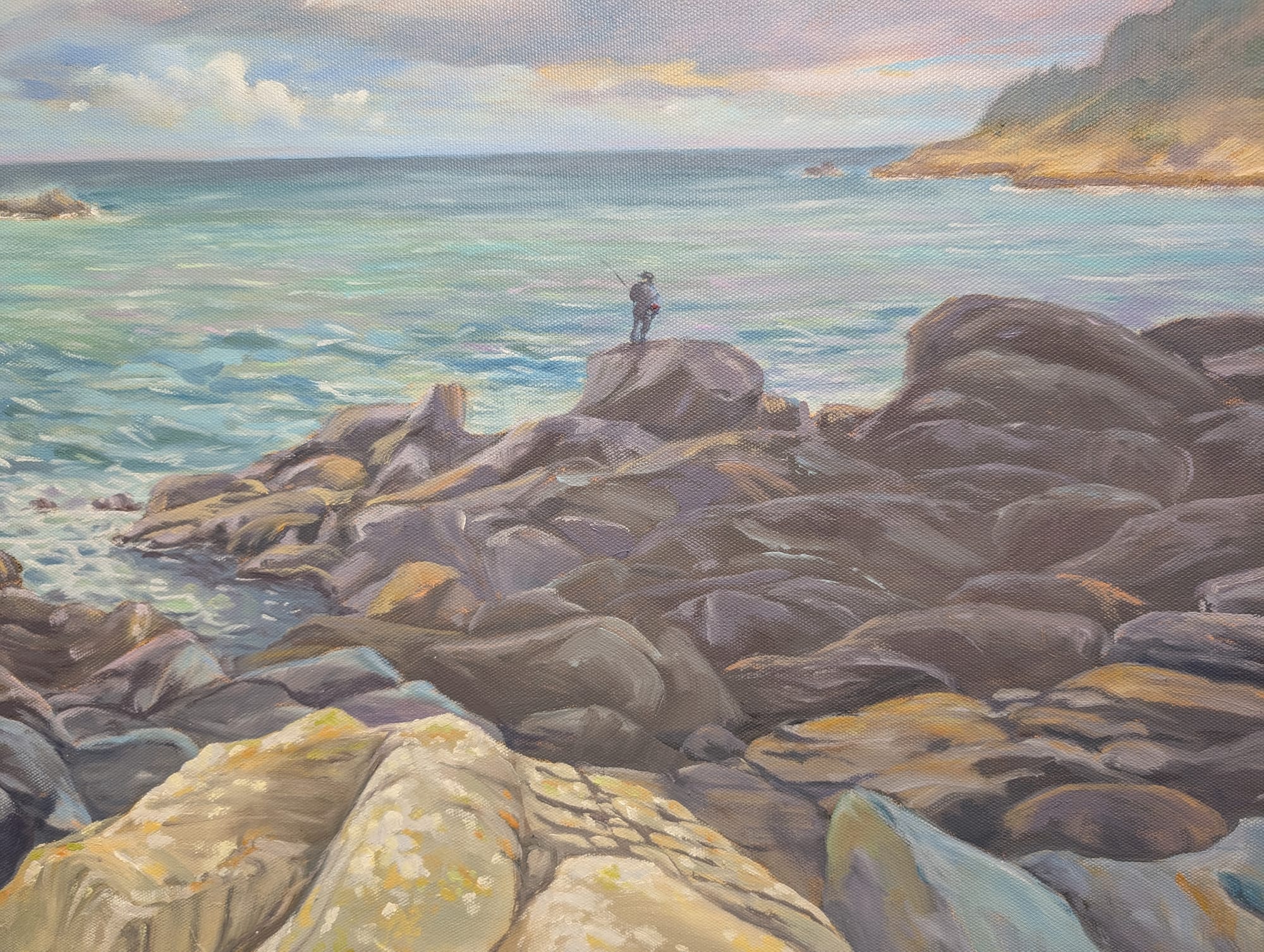
Minack has always been a big draw to me and then Porthcurno is just down at the bottom from there and it was evening and it was just down on the beach and the sun came through and hit the rocks, they went this beautiful golden colour, and then you've got Gurnards head right out in the sea, which looked like it was under a spotlight. It was like a light from the theatre was shining on it. It was so beautiful, the great big swell of the ocean coming in and the gold reflected on the sea. It was one of those moments where you just think, yeah, I want to get that down on canvas.
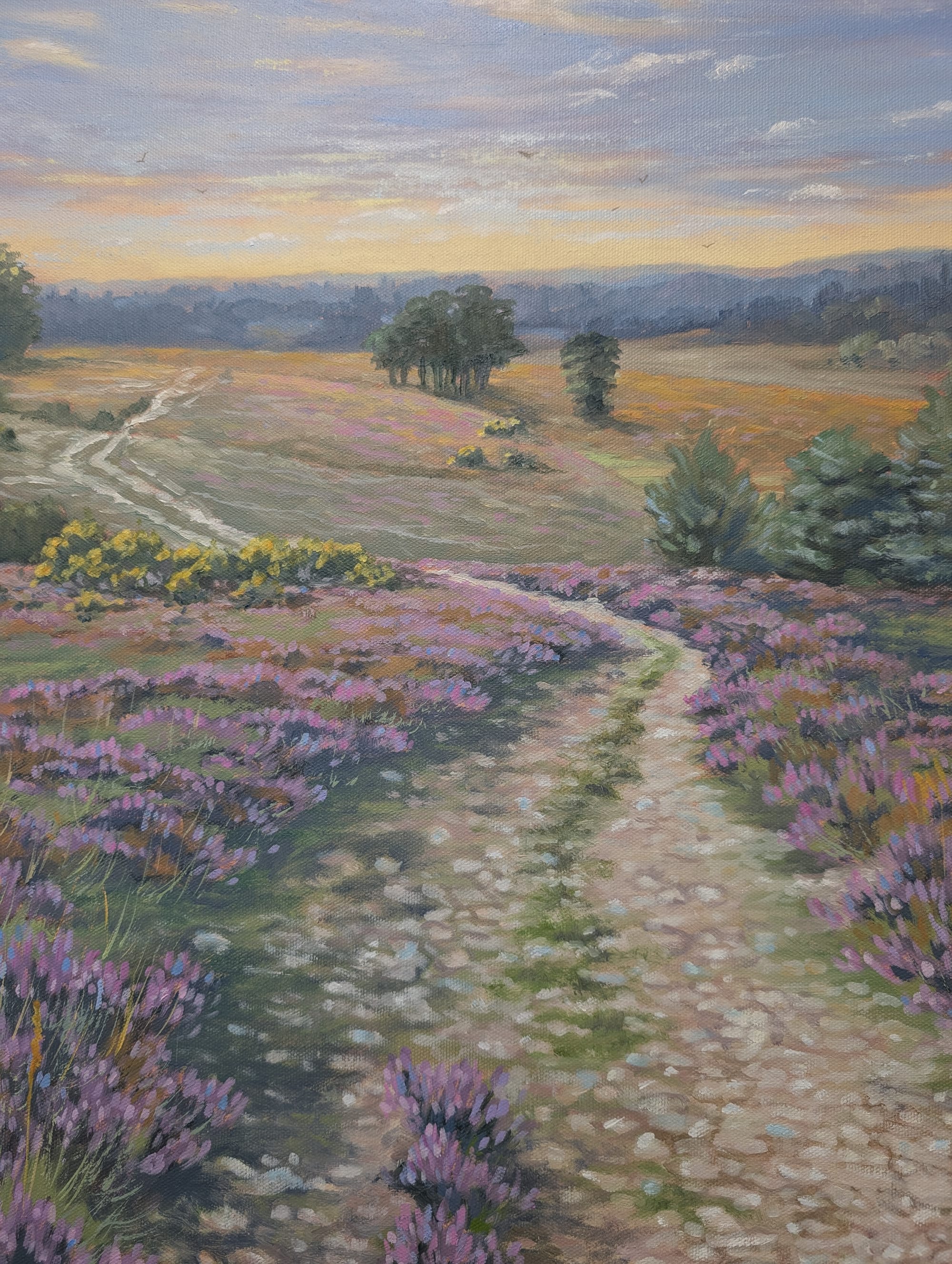
Glaisdale rigg is very, very Special to me. It's where my husband was born and brought up, and he passed away 3 years ago. I have walked and ridden along that path because I lived there for a couple of years. That's a special place for me. With the whole loneliness of the moorland. I like to try and catch a bit of the atmosphere of the place in the painting. That's also the reason I like to go quite large-scale. Somewhere like the North Yorkshire Moors is so vast. I couldn't imagine trying to put it onto a foot square canvas. It had to be big. I knew when I was sketching that one that it had to be big.
Because we all teach so much, and a lot of the work that we do is for planning classes and a lot of my other painting, especially things like murals, is all to commission, it goes off, and nobody sees it apart from the person who commissioned it; it was just nice to take time out. I just said I'm not doing any courses for these months. I’m just going to paint, which was quite pressured because of the deadlines, but we all need deadlines. It was so nice to paint for myself, and not to the requirements of clients or for one of my courses. It was a bit of a break for all of us. Rosie paints a lot anyway, but Jen and I were saying you realise how important it is to paint for yourself and not for anybody else, and so definitely it's reignited the spark.
The Colour Factory: The Everyday runs until the 26th of July. Artworks are available for purchase. You can see more of Rachael's fantastic works on her website here: