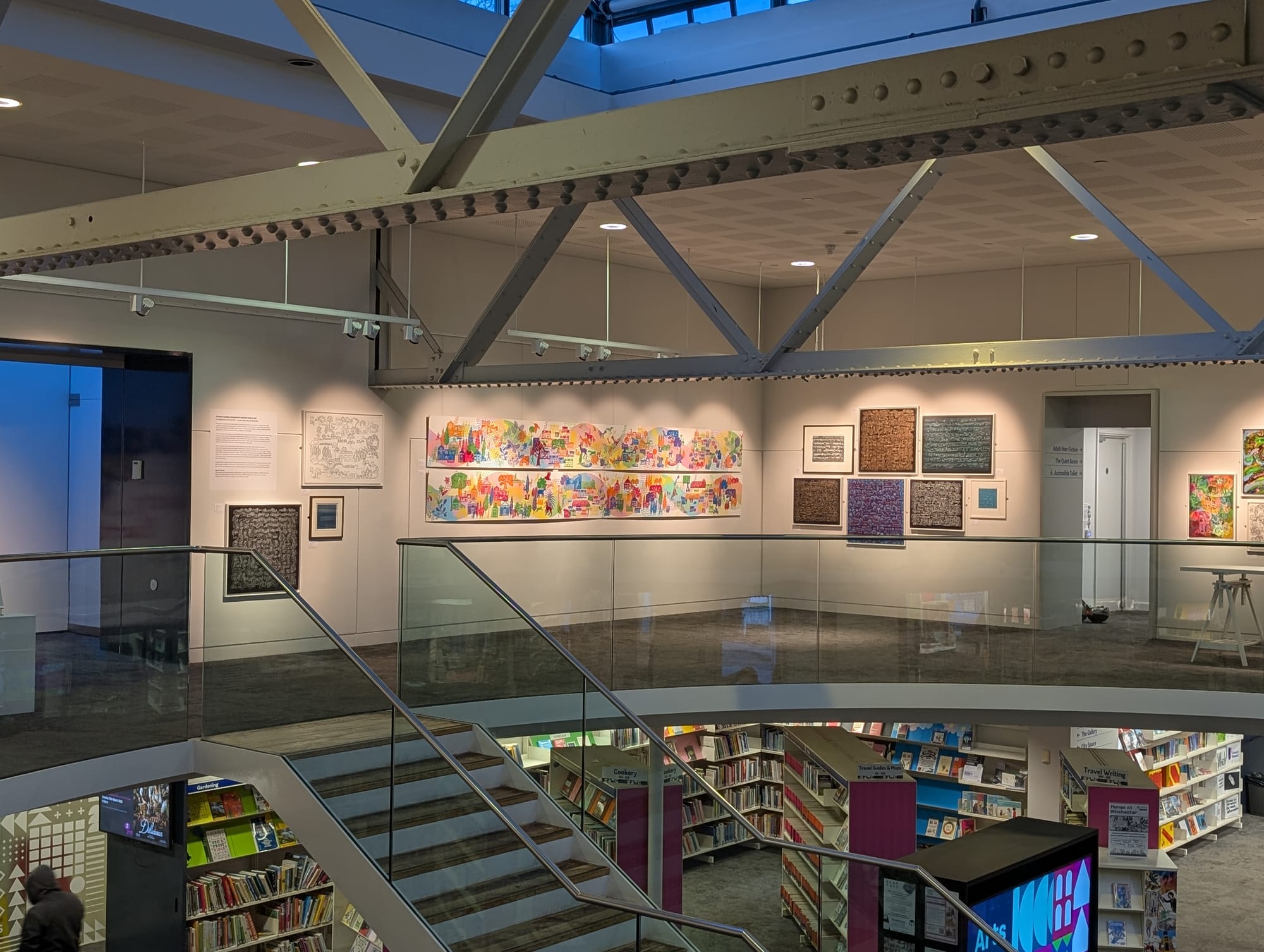
In this article we join artist Mark Jones at the Arc, Winchester. He walks us through the thoughts behind the brilliant exhibition Mapping the Familiar currently open at the Arc, Winchester until the 12th of April.
How do you feel about the exhibition?
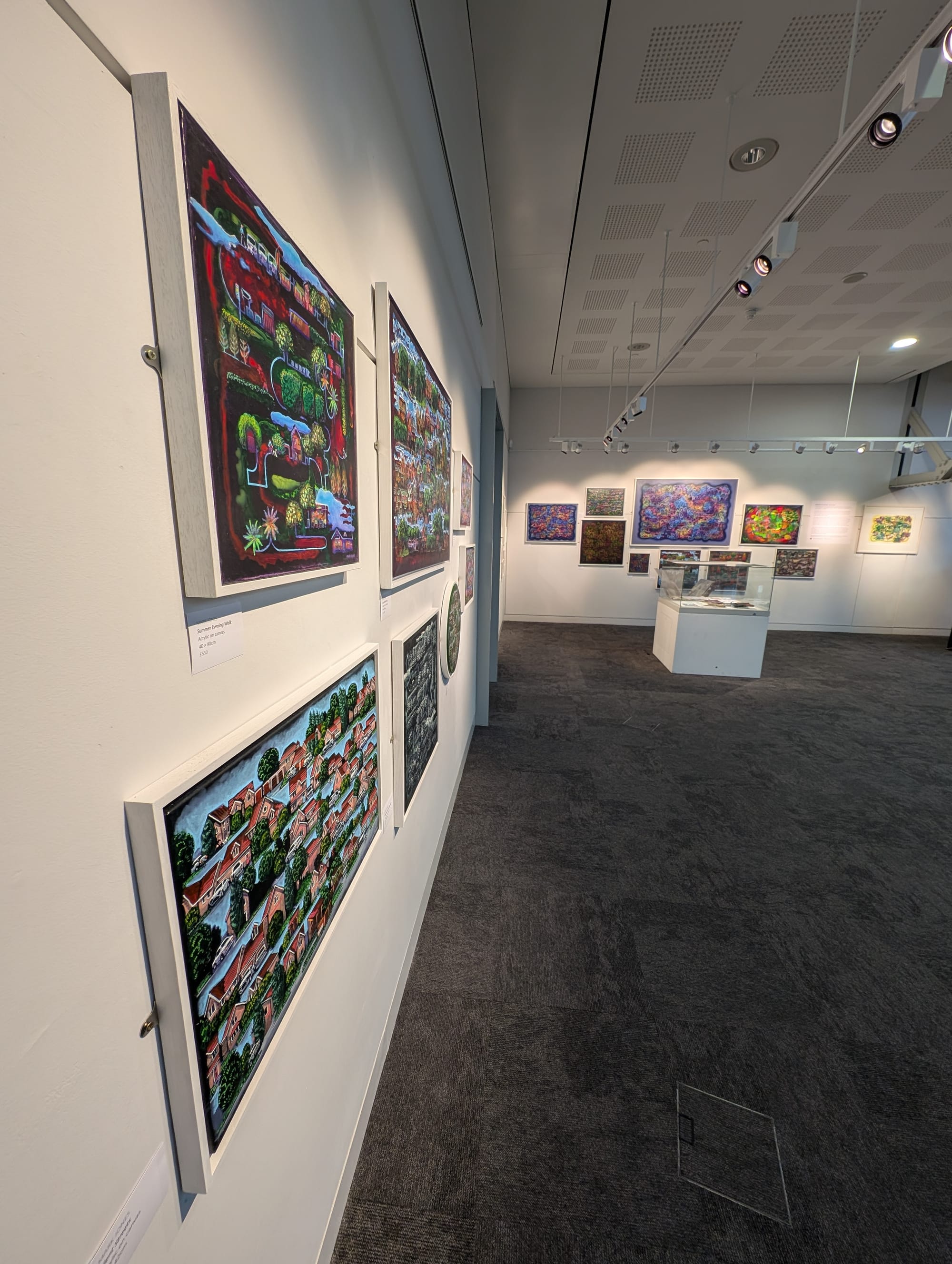
It is greater than I expected; there was anxiety beforehand, as I’m sure there is for many exhibitors. I wondered what it was going to look like and if it would hang together as a show. With your support and Kirsty's support, the display pulled together quite nicely, and the theme runs throughout. I loved your suggestion of arranging it in a more spontaneous fashion rather than in a regimented single line, and I think it benefits from that with the clusters and groupings. In terms of how I review and reflect on it, that’s still very much a process that I am going through. As I talk to people, it informs me of how the exhibition is viewed, giving me the data and information to evolve towards the next exhibition. Seeing five years of work on display for the first time makes me realise that the enjoyable stuff has value and it is resonating and connecting with people, which is the most rewarding thing. People recognise the routes, and they have walked them, but only come to appreciate them by looking more carefully.
Please could you tell us about the making of Hounds of the Heath?
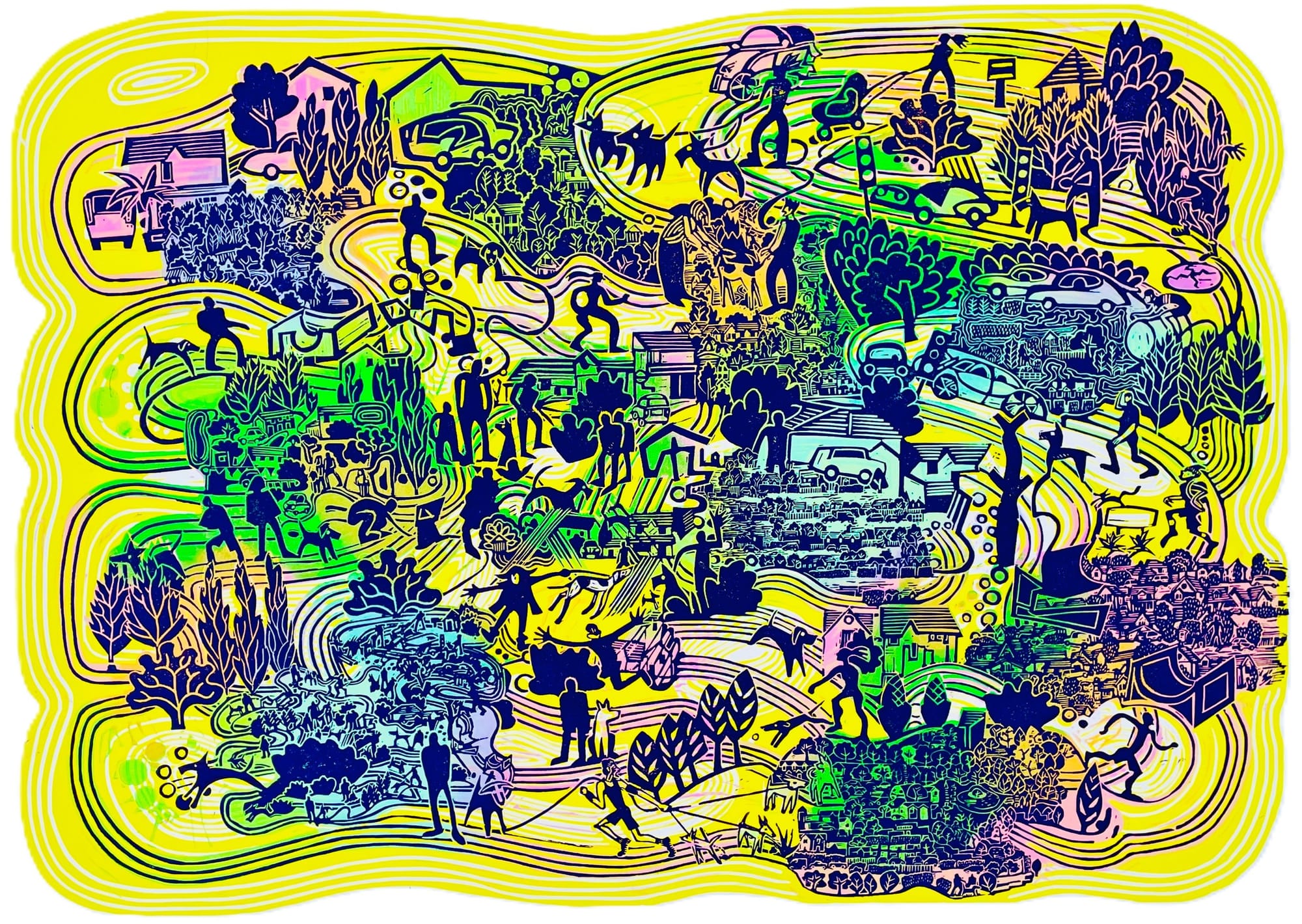
It is the largest linocut print that I’ve ever attempted. It consists of a park scene with lots of little figures, such as dogwalkers and runners, meandering around a big park area. There are trees and houses as well, and there are also pathways that are indicated as continuous lines or dots. The colour scheme is green, pink, and predominantly yellow, inspired by looking at the Ordnance Survey maps from the 1960s. Other Influences include L.S. Lowry and his street scenes with all the tiny little figures and Pieter Brueghel’s panoramic landscape scenes. I have spent five years covering the same ground, then recalling these roots through continual line drawing, which is converted into prints. But with that print, I started to combine previous prints into one piece, so it is a sort of collage of miniature prints, and the scale is deliberately shifted. I have fine detail close-ups of suburban housing areas, and then it zooms out. And you see larger figures that are walking between these places, so there is a shift in scale. It is like a map, but it’s not an aerial view; it’s stylised. Fluctuations in colour reflect the emotions that I felt on the walk, and at certain points, there are hot spots where I might have been anxious. Um, perhaps the dog has reacted to another dog, which often happens because he’s a terrier, so he’s a bit confrontational with other dogs, and that can raise my anxiety, but there are areas of green where I am much calmer and reflective.
It added to the emotion of the piece. And I hope that it resonates with people, especially fellow dog walkers who relate to these incidents.
Could you please tell us more about your community work that features, by way of smaller frieze versions, both in the exhibition and is soon to be put in place in Boorley Green?
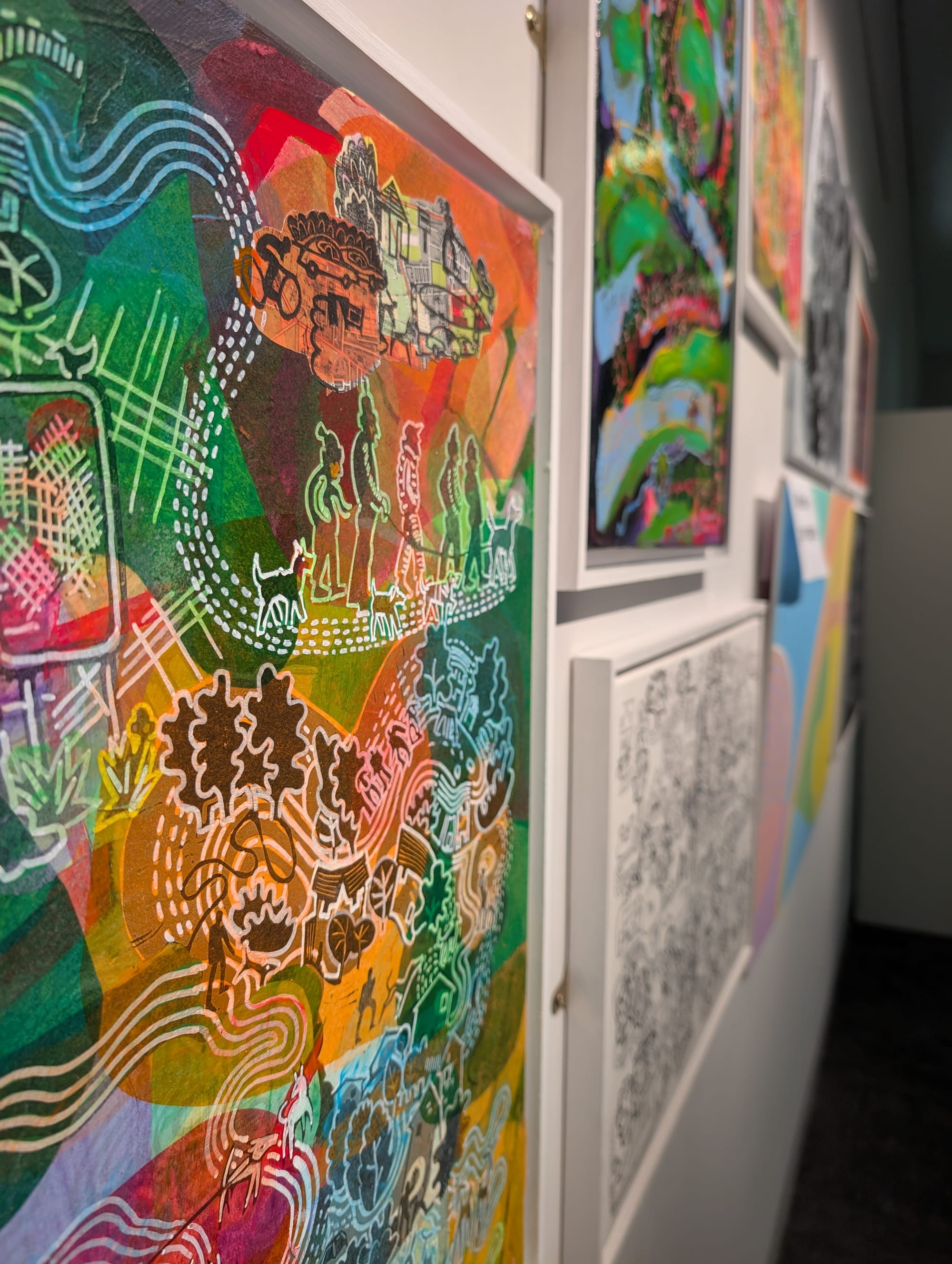
The Boorley Green Frieze is a large public art piece and is quite ambitious in scale. The work is 20 metres long by 75 centimetres high. Not as long as the Bayer tapestry, but inspired by that. The creation of this piece involved workshops with local community residents in the Botley and Boorley Green area. The brief was to create images of things they value from living in that area. So, it might have been a favourite tree or their house. It might be their house, their pets or the animals that they see in the area or birds, for instance, feature in the pieces. All the prints have personal significance to the people who made them, and I can recall them. I can still see them concentrating and carving the shapes or drawing.
By the end of the project, we had over 1200 pieces that we could then laminate onto this acrylic-painted wooden backdrop that my wife and I created. Yes, great fun. One of the things that I particularly enjoyed doing, with my wife Sue, was laminating these different coloured pieces, overlapping them and being surprised by the results. One colour layered over another over the painted backdrop, which often had polka dots on it, would create exciting colour combinations within the details of shapes. There’d be some unexpected outcomes. The unexpected combinations and ideas of people are what I enjoy most.
Where do you see this body of work leading next? What pathways is it leading to?
The next theme for my work is going to grow from this one, which has been about walking through Suburbia and the regular routes I have taken in all seasons, conditions and times. I think my next body of work will focus possibly on boundaries, alleyways, hedges, fences and garden areas; where and how public and private merge.
I have a show at the beginning of May in Printfest up in the Lake District which is a print festival. It comes together once a year. Printmakers from all over the UK gather. There will be forty of us exhibiting for four days and I am really looking forward to that.